
The juice of the grape is the quintessence of concentrated sunbeams. Thomas Love Peacock
Madeira, the subtropical Portuguese island 1000 kilometers southwest of the Iberian peninsula, is famous for its fortified wine. A well kept secret is that the locals also make their own private wine, for themselves, their families and friends. A tradition with skills handed over from generation to generation.
Last year in early September the Tastebuddies got the opportunity to join and take part in this whole process. In the municipal of Sao Vicente, situated in a valley on the mountainous volcanic north-western part of Madeira. On a small vine yard, around 150 m2, long ago being planted with the variety Jaque, Black Spanish. This almost black-skinned grape is, according to the locals, the absolute number one for this purpose.
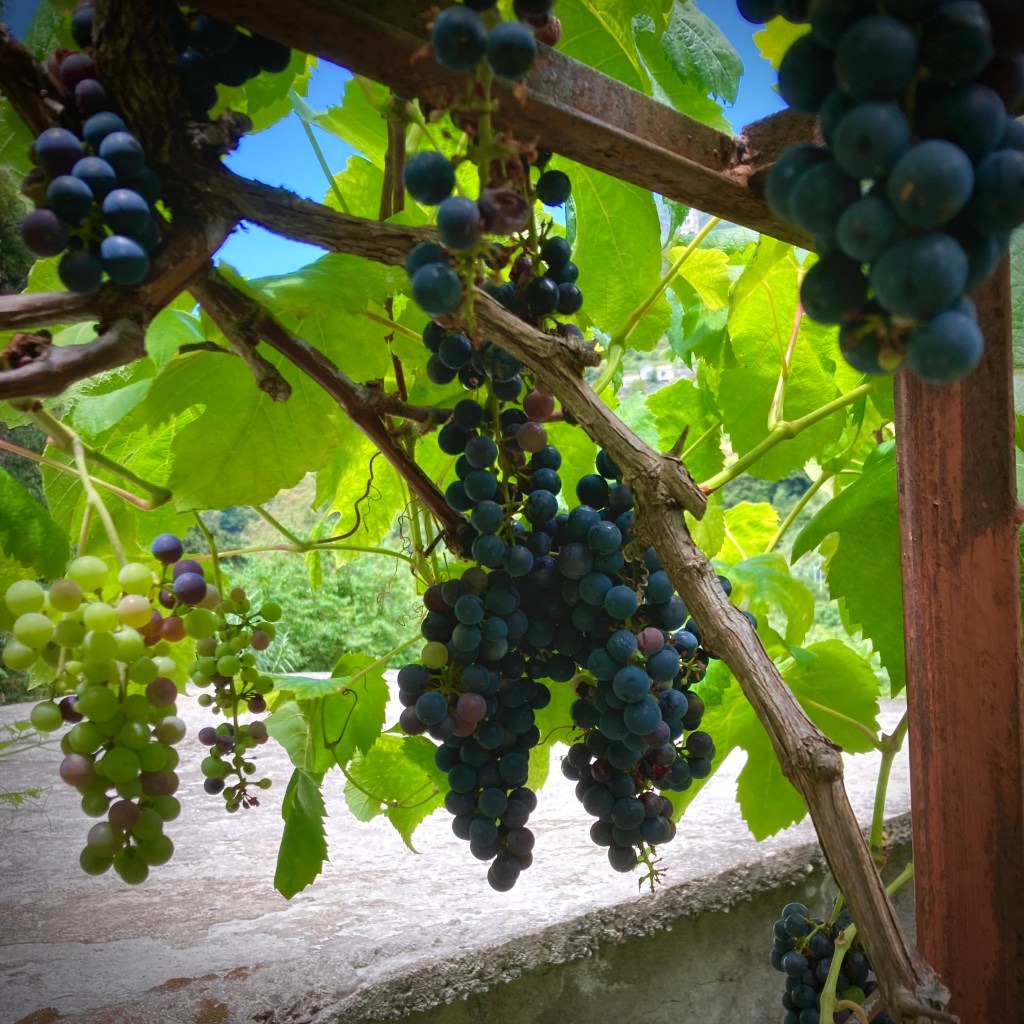
No wonder that Madeirans are cuddling those treasures. Nurturing their vines, carefully pruning, thinning out the leaves at the right moment to open up the canopy, to let the sunbeams reach the grapes. Handpicking the grapes when they reached the optimal matureness: sweet and incredibly juicy.
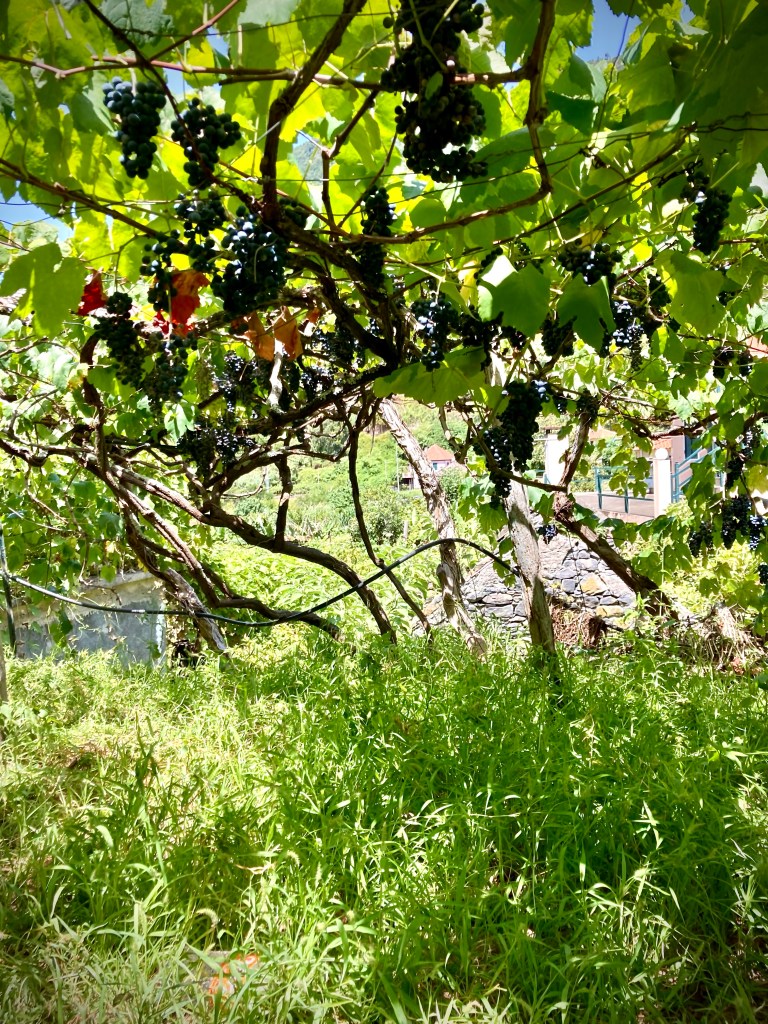
During harvest time the otherwise calm valley brims with activity. Everybody is out and about. Family, friends, young and old. Dogs. It doesn’t matter. Nobody wants to miss this special and important annual task. And there is of course the obligatory shared garrafão de vinho. Provided there is some wine left over from last year, of course!
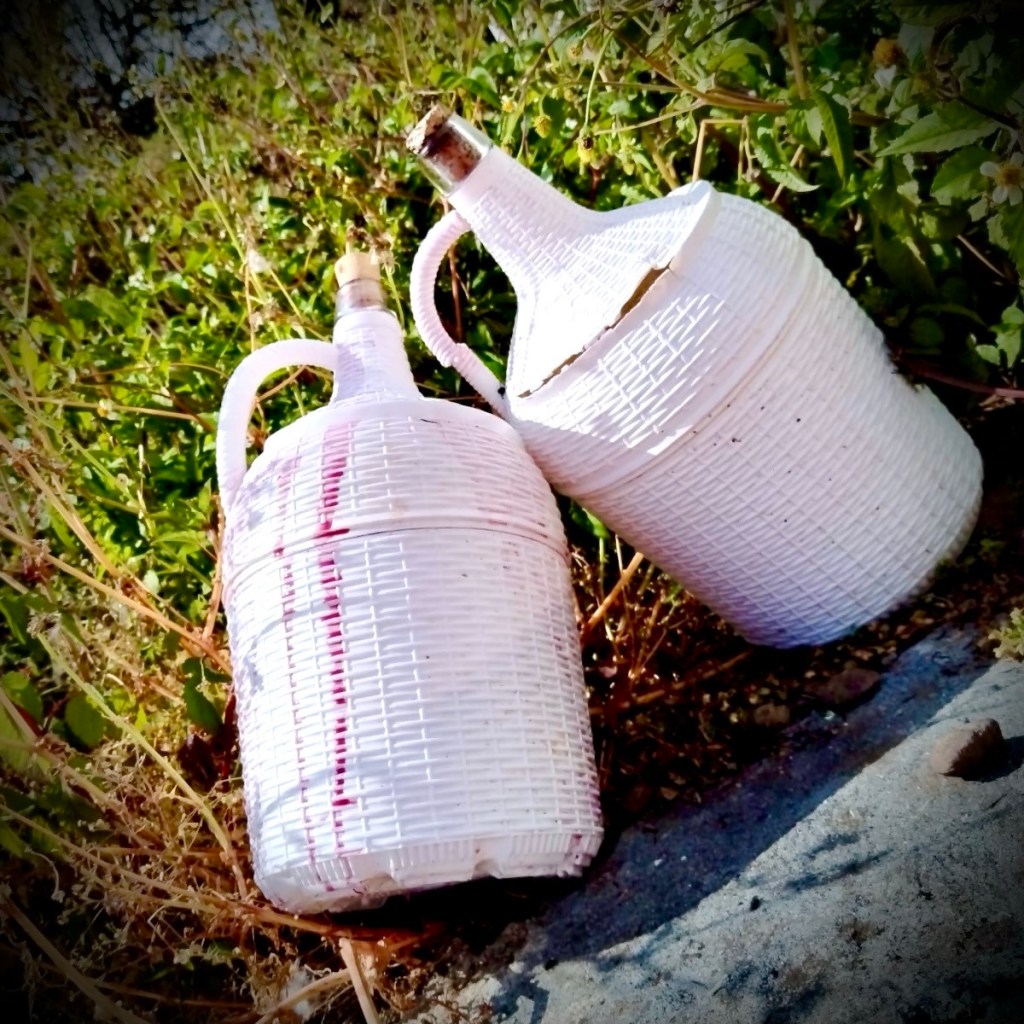
It makes the hard work easier. Cutting the heavy bunches of grapes and carrying the full baskets from terrace to terrace and to their final destination.
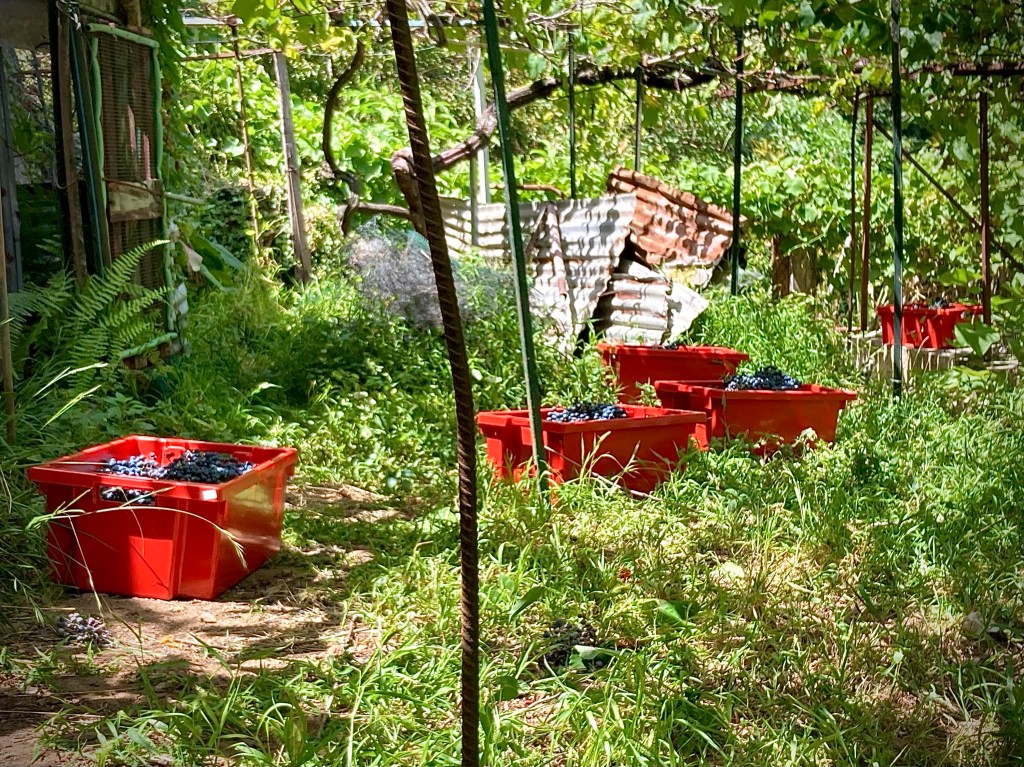
The grapes are brought to the lagar. Portuguese nomenclature for a shallow concrete basin, where the fresh harvest is deposited for crushing, eventual maceration, initial fermentation and sometimes pressing.
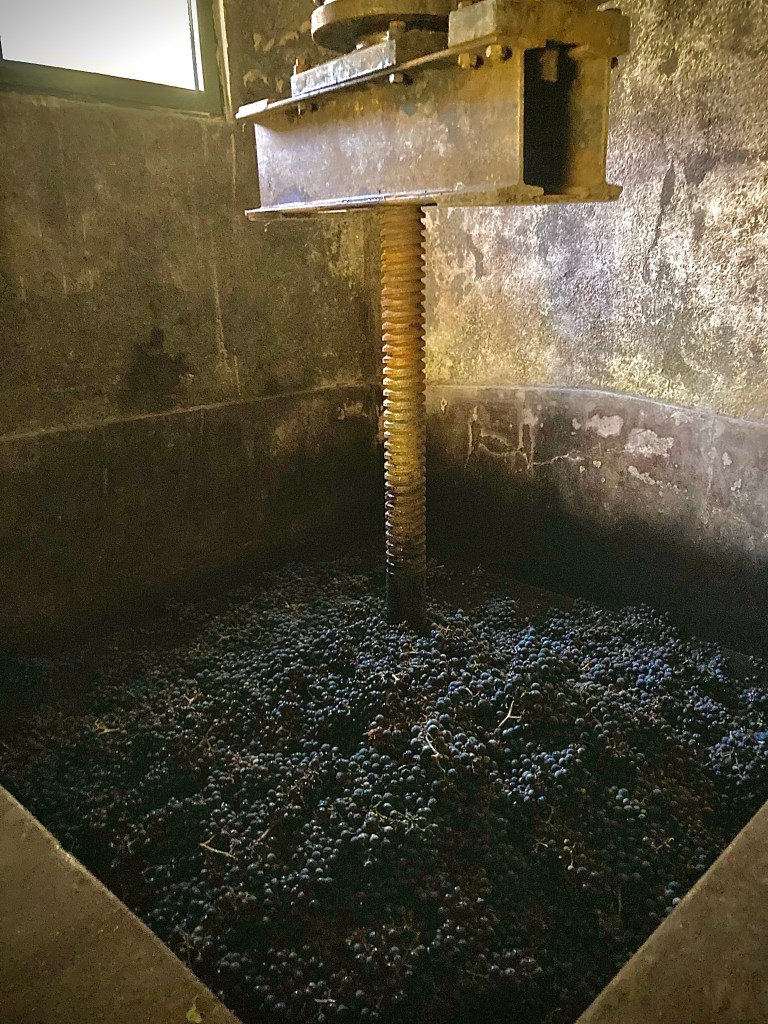
Time for the next step. The crushing of the grapes in order to extract their precious juice. For this process some wine makers are using a special crushing machine constructed in such a way that the bitter pits stay intact. Others prefer the no nonsense back to basic method, making bare feet wine. Shoes and socks off, trousers rolled up to above the knees and of course after thoroughly washing stepping inside the lagar. It´s certainly a new and sort of therapeutic, relaxing experience, but astonishingly heavy to walk around stomping among the grape branches, hundreds of kilos of them. This requires stamina! See how they gently brake down, transforming into an extremely colourful liquid, by just using your body weight. The tannins are so intense, that it takes days (and several showers) for the used body parts to return to their normal tint. In this wine yard the mash/must in the lagar gets thoroughly stirred a couple of times a day for the following 1,5 to 2 days. How long exactly depends on the preference and aim of the winemaker. To get a smoother, more accessible wine with less tannins, this step is often kept to an absolute minimum or even left out on Madeira. Regardless, quite soon nature´s magic kicks in. One cannot escape noticing what is going on! Gurgling, bubbling and other indescribable sounds are escaping from the lagar. Natural occurring yeasts, both on the grape skins and airborne ones, are having the time of their life feasting on the natural sugars in the ripe grapes. This is what it´s all about. The sugar turns into alcohol! Now it is time for the pressing. Usually this is done with the huge old press in the middle of the lagar. Since it hasn´t been a particularly high yield year, this time a smaller, freestanding press is used. This press is also suitable for the planned homemade cider, which will be made later on in the autumn. Both presses apply the same technique. The mash goes into a vat consisting of interspaced slats and is covered with wooden blocks. And then: let those muscles work!
The pommace – the solids – stays in the press while the liquid is pouring into the bucket.
Who wouldn´t be curious. Who could resist the temptation… Time for a sip! Tasting and smelling the wine in progress indicates that it is slightly alcoholic and still quite sweet.
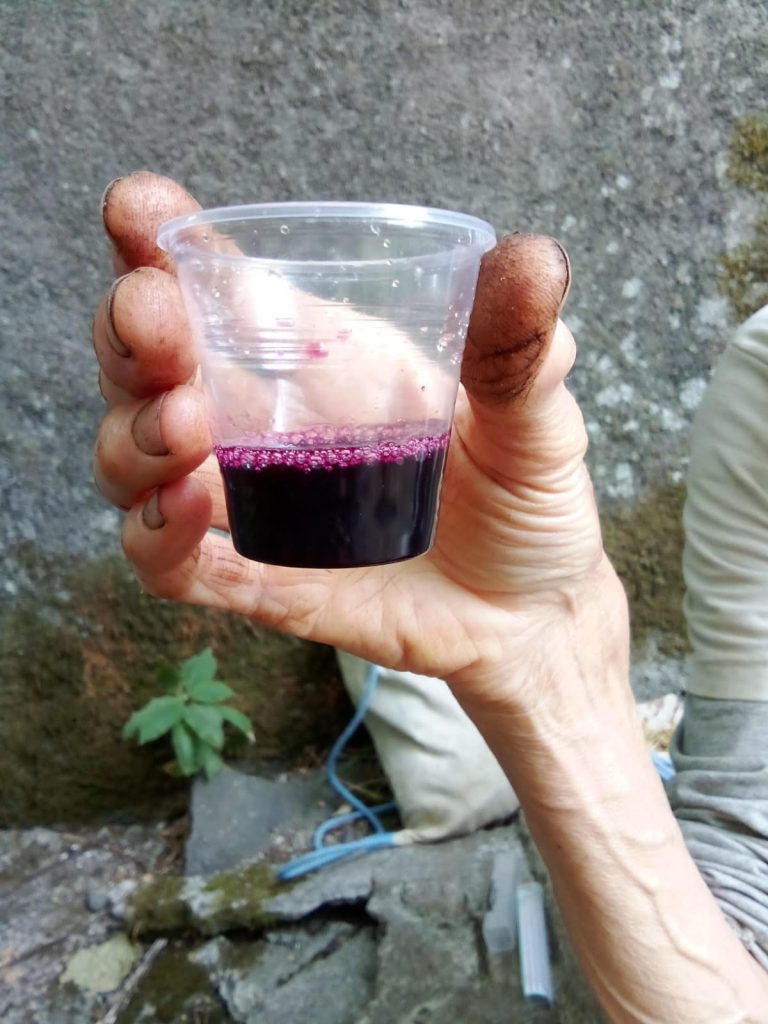
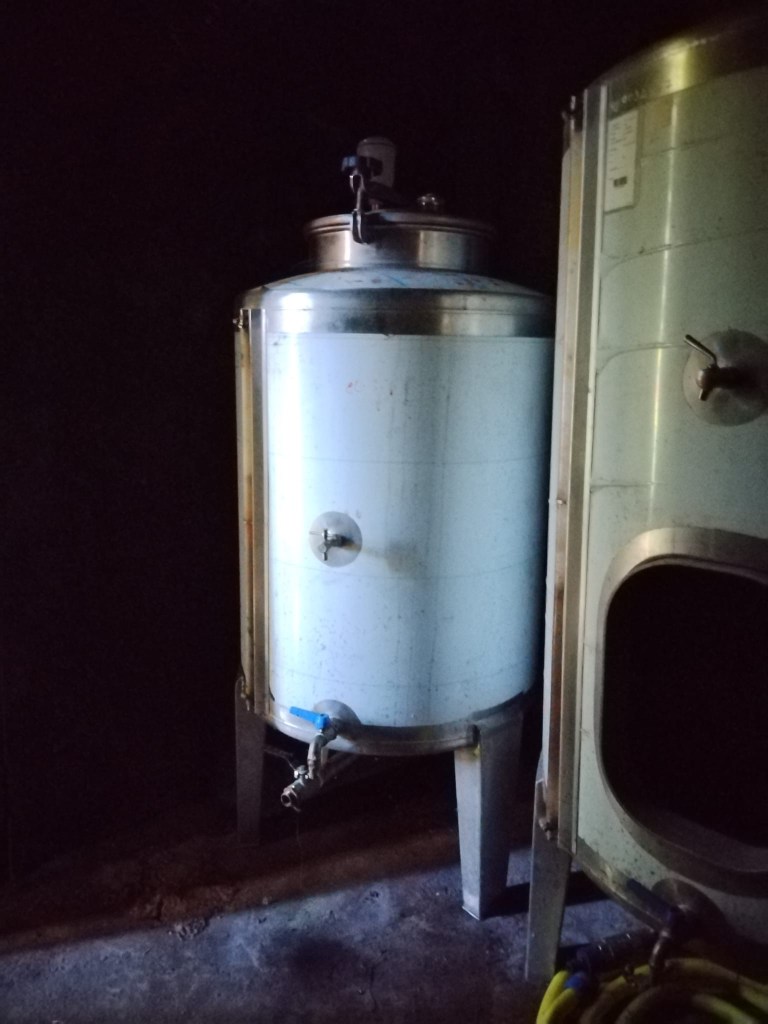
Almost 400 liters are poured into a stainless tank. There is plenty of sugar left to be converted in to more alcohol. The top tank opening is covered with a cloth for approximately 7 days. After this period an airlock is placed to prevent the process form going too far, which would turn the content into vinegar. Which we don´t want.
A couple of weeks later the fermentation has slowed down, The now still harsh wine has reached around 12% alcohol and is being transferred into an oak barrel, previously used in France for aging Bordeaux wine. Being in contact with the wood does wonders during the maturing. All loose ends of tastes bond magically together in a complex progress. That is… if everything is going the way it should. You never know, nature decides and the outcome is more or less unpredictable. Time will tell.
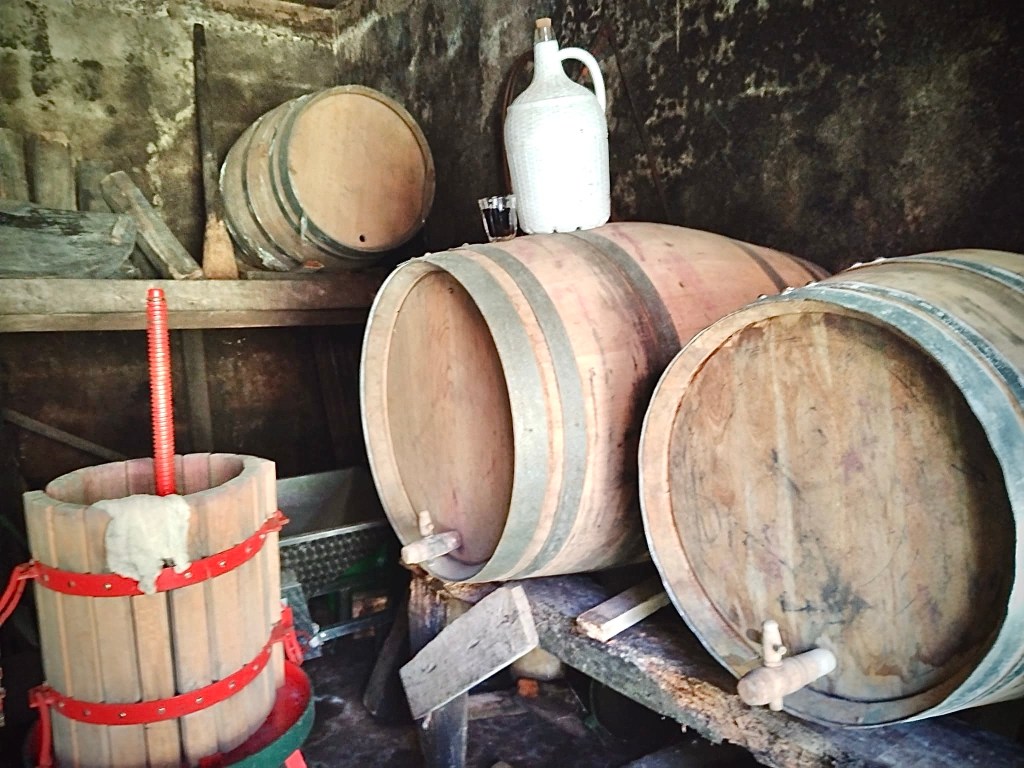
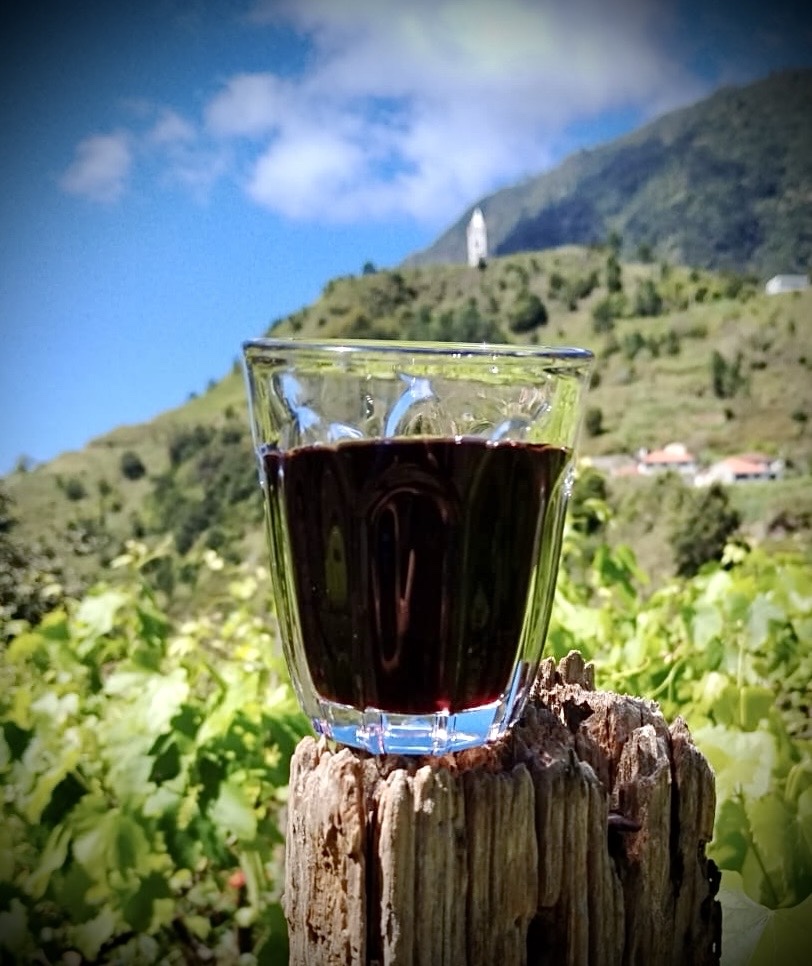
Tradition is to let the wine mature in the barrel until the vesper, which is the evening before 11th of November. Celebrating the vinho novo – new wine – is a must on Madeira. It is served together with Bacalhau assado , baked salted codfish, and castanhas assadas, roasted chestnuts. You won´t be surprised that the Tastebuddies were more than happy when shortly after vesper they received a message in a bottle from Madeira. What a wine! It´s hard to describe. Apart from the rich and deep taste of this three dimensional wine, it has something else. The impressive experience of the harvest and the different steps of winemaking are somehow integrated in the bouquet. It provides a fourth dimension. Robert Louis Stevenson was right when he wrote:Wine is bottled poetry.
Tip; A small part of this kind of homemade, non fortified Madeiran wine reaches a few bars and cafe´s on the island. The owners have a special legal permit to serve and to sell the small scale production.
 Tastebuddies
Leave a comment